For most commercial properties in 2026, aluminum fencing offers the better long-term value. It does not rust, weighs roughly one-third as much as steel, and needs little maintenance beyond occasional washing. Steel fencing remains the right choice when maximum impact resistance or high-security perimeters are the priority, provided you budget for galvanizing and periodic recoating.
Choosing between aluminum vs steel fencing is one of the first decisions a contractor, architect or property developer makes when planning a commercial perimeter. Both materials can be fabricated into clean picket designs, accept a powder-coated finish and meet commercial code requirements. The real differences appear over time: in the budget, in the maintenance schedule and in how the fence performs in your climate. This guide covers both materials, quote requirements, and 2026 pricing and timelines.
Aluminum vs Steel Fencing: Side-by-Side Comparison
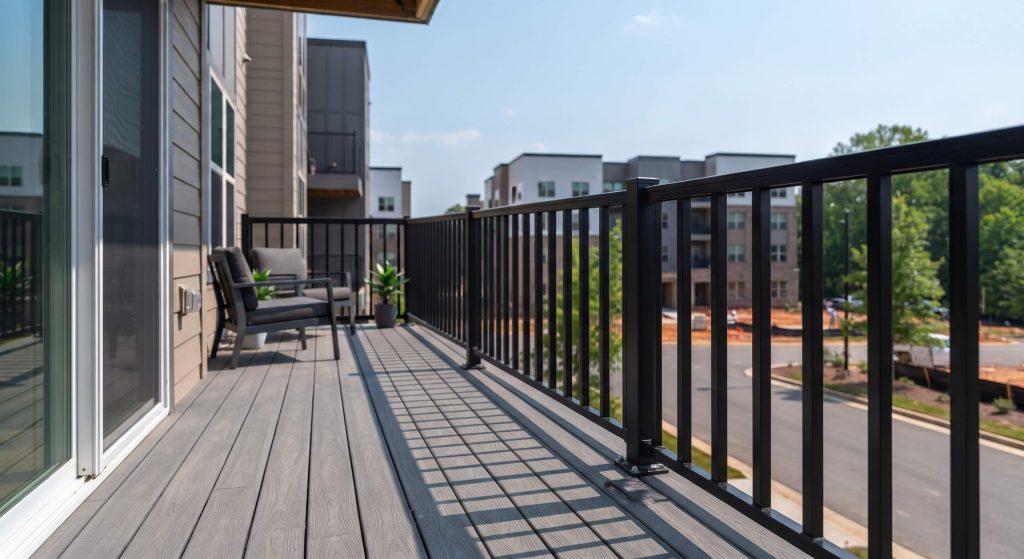
Commercial fencing controls access, protects assets and often has to meet pool-barrier, accessibility or insurance requirements. Aluminum fencing is fabricated from extruded 6000-series alloys that form a protective oxide layer, so it does not rust even when the finish is scratched, and its lighter panels simplify installation on podium decks and retaining walls, one reason aluminum fabrication is the best choice for many structural applications. Steel fencing is heavier and more rigid, which keeps it common on high-security perimeters, but it depends on galvanizing and coating to resist corrosion. If your scope also includes guards, coordinate finishes with your commercial aluminum railing system.
The table below summarizes the factors that matter most on commercial projects.
| Factor | Aluminum Fencing | Steel Fencing |
|---|---|---|
| Corrosion resistance | Excellent; does not rust | Requires galvanizing + coating; rusts when coating fails |
| Weight | Roughly one-third the weight of steel | Heavy; requires more robust handling and footings |
| Strength / impact resistance | Good for most commercial applications | Superior for high-security and high-impact areas |
| Maintenance | Minimal: periodic washing | Periodic inspection, touch-up and recoating |
| Coastal performance | Ideal for salt air and humidity | Higher risk of accelerated corrosion |
| Upfront cost | Generally lower to comparable | Generally comparable to higher (galvanizing adds cost) |
| Lifecycle cost | Lower over 15–20+ years | Higher due to recurring maintenance |
| Installation | Faster, lighter panels | Slower, heavier panels |
| Finish options | Wide range of powder-coat colors | Wide range of powder-coat colors |
| Best fit | Multifamily, retail, pools, coastal, HOA | Industrial, utility, high-security perimeters |
Durability and Corrosion: The Deciding Factor for Most Projects
For most commercial properties, corrosion is what separates the two materials over time. Near the coast, around chlorinated pools or where de-icing salts are used, steel can show rust at welds, post bases and scratches within a few years. Aluminum avoids this: if a mower or vehicle scrapes the finish, the exposed metal will not rust.
The Role of Powder Coating
On steel, the coating is the primary line of defense against rust. On aluminum, the coating is mainly about color, UV stability and appearance, because the base metal already resists corrosion. We cover this in our article on how powder-coated aluminum enhances durability and curb appeal.
Strength Where It Actually Matters
Steel is stronger pound for pound, but properly engineered commercial aluminum fencing meets the performance needs of most multifamily, retail and institutional properties. The question is not “which is stronger?” but “how much strength does this perimeter actually require?”
Requirements and Documents Needed Before Requesting a Quote
A precise quote depends on precise information. Having the following ready shortens estimating and reduces change orders. For a full walkthrough, see our guide on requesting a B2B fabrication quote.
Project Documentation Checklist
| Document / Information | Why It Matters |
|---|---|
| Site plan or architectural drawings | Defines total linear footage, gate locations and layout |
| Fence height and style | Affects material quantity, picket spacing and price |
| Gate schedule (pedestrian, double, vehicle) | Gates are often the most variable cost item |
| Mounting method (in-ground, core-drilled, surface-mounted) | Changes post design and installation time |
| Finish color and specification | Determines powder-coat requirements |
| Applicable codes (pool barrier, ADA, local zoning) | Ensures the design meets inspection |
| Project schedule | Allows realistic fabrication and delivery planning |
| Site conditions (slopes, retaining walls, soil) | Affects racking, stepping and footing design |
Code and Compliance Considerations
Pool Enclosures
Commercial pool barriers are commonly required to be at least 48 inches tall, with openings that do not allow a 4-inch sphere to pass through, and with self-closing, self-latching gates. Local amendments vary, so always confirm with the authority having jurisdiction.
Accessibility and Gate Hardware
Pedestrian gates on accessible routes need hardware operable with one hand, without tight grasping or twisting. Planning this early avoids hardware swaps after inspection.
Pricing and Timelines in 2026
Pricing depends heavily on height, style, gate count, finish and site conditions, so treat the figures below as planning ranges, not quotes. They reflect typical installed costs for ornamental commercial fencing in the Southeast U.S.
Typical Installed Cost Ranges
| Item | Aluminum (Commercial Grade) | Steel (Galvanized + Powder Coated) |
|---|---|---|
| Ornamental fence, per linear foot (installed) | ~$35 – $75 | ~$45 – $95 |
| Pedestrian gate (each) | ~$600 – $1,800 | ~$800 – $2,500 |
| Recoating / major maintenance | Rarely needed | Every ~5–10 years in harsh environments |
Ranges are budgeting estimates; final price depends on design, quantities and location.
Why Lifecycle Cost Changes the Math
A steel fence with a similar upfront cost can cost considerably more over 20 years once you add inspections, rust treatment and recoating. For property owners and developers who hold assets long term, aluminum’s lower maintenance usually makes it the more economical choice.
Typical Project Timeline
| Phase | Typical Duration |
|---|---|
| Quote and design review | A few business days to 1 week |
| Shop drawings and submittal approval | 1 – 2 weeks |
| Fabrication and powder coating | 2 – 4 weeks (steel may add time for galvanizing) |
| Installation | 1 – 2 weeks for most mid-size perimeters |
Timelines vary with project size and season. Working with a local aluminum fabricator typically shortens lead times and makes field adjustments easier to resolve.
Frequently Asked Questions
Is aluminum fencing strong enough for commercial properties?
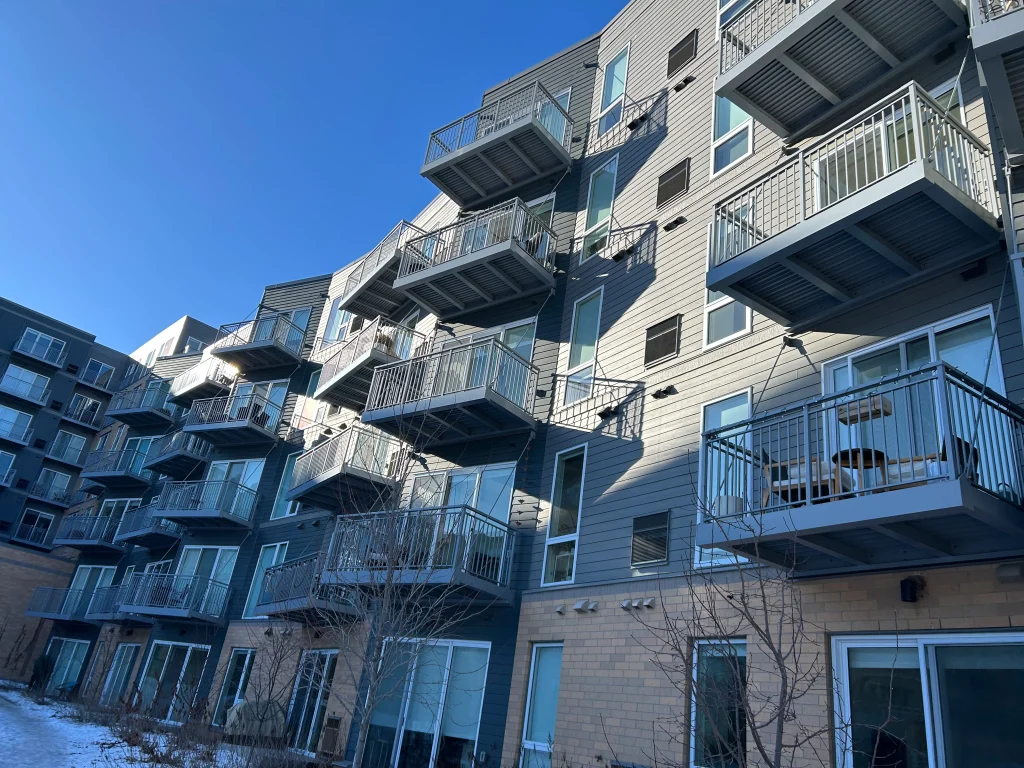
Yes. Commercial-grade aluminum fencing, designed with the correct picket thickness, rail profile and post spacing, is strong enough for multifamily, retail, office and most institutional sites. Steel is generally only necessary where high impact resistance or high-security anti-intrusion performance is required.
Which lasts longer, aluminum or steel fencing?
In most environments, aluminum fencing lasts longer with less maintenance because it does not rust. Steel can also last decades, but only with regular coating inspection and repair. In coastal and humid regions, aluminum has a clear durability advantage.
Is aluminum fencing cheaper than steel?
Aluminum is often comparable to or lower than galvanized, powder-coated steel in upfront cost, and it is almost always less expensive over the full life of the fence due to minimal maintenance. To compare fairly, request a quote with the same height, style and gate schedule for both materials.
Can aluminum fencing be used for pool enclosures?
Yes. Aluminum is one of the most common materials for commercial pool enclosures because chlorinated water and humidity do not cause it to rust. The fence must still meet pool-barrier requirements, including a minimum height of 48 inches, openings that do not pass a 4-inch sphere and self-closing, self-latching gates.
How long does commercial aluminum fencing last?
A properly fabricated and powder-coated commercial aluminum fence typically lasts 20 years or more with minimal maintenance, because the base metal does not rust. Over time, the finish and gate hardware usually need attention, not the structure itself.
Conclusion
When you compare aluminum vs steel fencing for commercial properties in 2026, the decision comes down to three questions:
- Purpose: aesthetics, access control and code compliance point to aluminum; forced-entry resistance points to steel.
- Environment: coastal, humid, pool-adjacent or salt-exposed sites strongly favor aluminum.
- Ownership horizon: owners who want low upkeep over the long term should specify aluminum.
Steel still earns its place on high-security and industrial perimeters. For multifamily, retail, hospitality, coastal and pool applications, aluminum delivers the best balance of appearance, durability and lifecycle value.
At Richards Aluminum Fab LLC, we fabricate structural aluminum systems, including custom aluminum fence and gate systems, for contractors, architects and developers across North Carolina, South Carolina and Virginia. We review your drawings, confirm code requirements and deliver a fence designed to perform from day one.
Request your commercial aluminum fencing quote — response in 24–48 hours. Send your drawings to Richards Aluminum Fab LLC: Request a Quote