Commercial infrastructure decisions get made once and lived with for decades — the material chosen for railings, ladders, canopies, and fencing determines maintenance budgets, structural feasibility, and appearance long after the original construction crew has moved to the next job. Aluminum fabrication has become the default specification across commercial infrastructure precisely because it solves the weight, corrosion, and design-flexibility problems that older material choices leave unresolved. This guide explains why.

The Core Advantages Driving Aluminum’s Adoption
Aluminum outperforms traditional infrastructure materials on three measurable fronts: strength-to-weight ratio, corrosion resistance without ongoing maintenance, and fabrication flexibility for custom applications. Across railings, ladders, canopies, fencing, and balconies, these same three advantages are what push specifiers toward aluminum on modern commercial projects.
Infrastructure elements like railings, access ladders, and canopies aren’t isolated design choices — they’re systems that have to perform consistently across a building’s entire service life, often without direct maintenance access. Material selection at this scale isn’t just an aesthetic decision; it’s a long-term cost and liability decision.
Strength-to-Weight Ratio
Aluminum weighs roughly a third of comparable steel while still meeting the structural load requirements commercial applications demand — guardrail loads, ladder side rail strength, canopy span requirements. That weight advantage reduces the structural burden placed on supporting building elements, which matters most on retrofits and multi-story applications where cumulative weight compounds across dozens or hundreds of installed units.
Corrosion Resistance Without a Maintenance Cycle
Unlike ferrous metals, aluminum forms a natural oxide layer that protects it from rust even where a surface coating is scratched or worn. Combined with a powder-coat or anodized finish, aluminum infrastructure holds up through years of direct weather exposure without the recurring coating inspection and touch-up cycle steel requires — a meaningful advantage on infrastructure elements that are difficult or costly to access after installation.
Where Aluminum Fabrication Delivers the Most Value
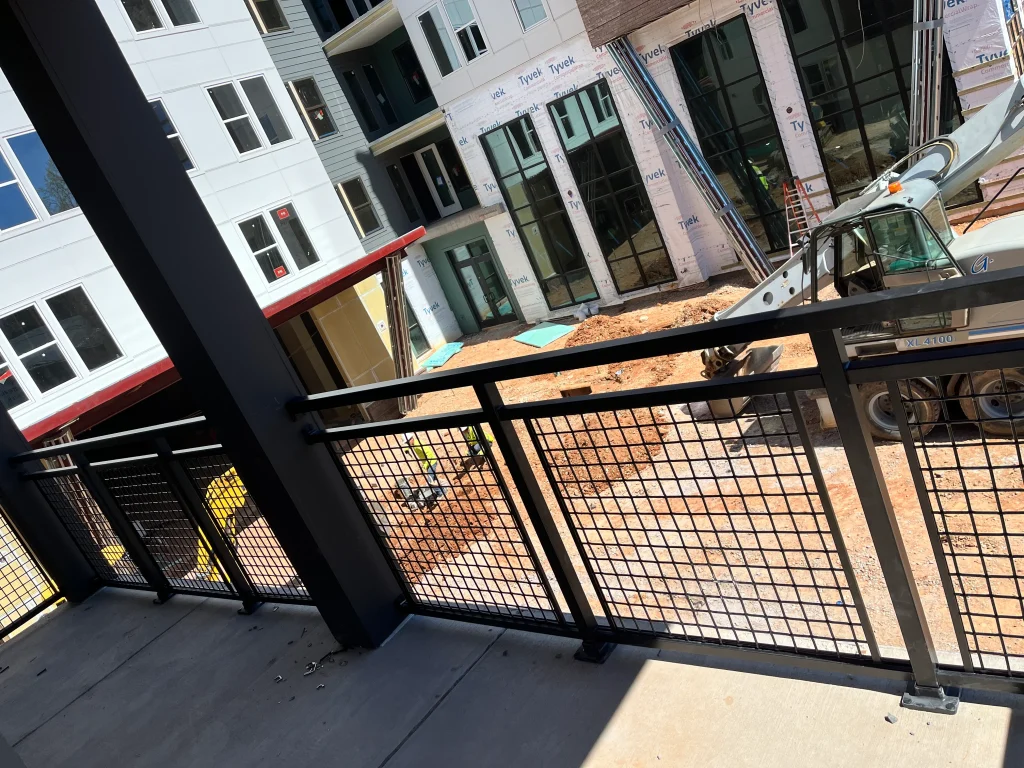
Aluminum’s advantages compound most on infrastructure elements that are structurally exposed, weather-exposed, and specified at volume — railings, access ladders, canopies, fencing, and balconies all fall into this category on modern commercial projects. Each application draws on a different combination of aluminum’s core strengths.
Railings and Guardrail Systems
Railings carry strict structural load and code compliance requirements while remaining constantly weather-exposed. Aluminum meets the load requirements without the coating maintenance cycle steel demands, which is why it’s become the standard material for commercial stairwell, mezzanine, and rooftop guardrail systems.
Access Ladders and Fall Protection Systems
Fixed ladders, alternating tread ladders, and ship ladders are frequently mounted in hard-to-access exterior locations — rooftops, mechanical penthouses, loading dock perimeters — where ongoing maintenance is impractical. Aluminum’s corrosion resistance keeps these access points structurally sound without a recurring service requirement.
Canopies, Fencing, and Balconies
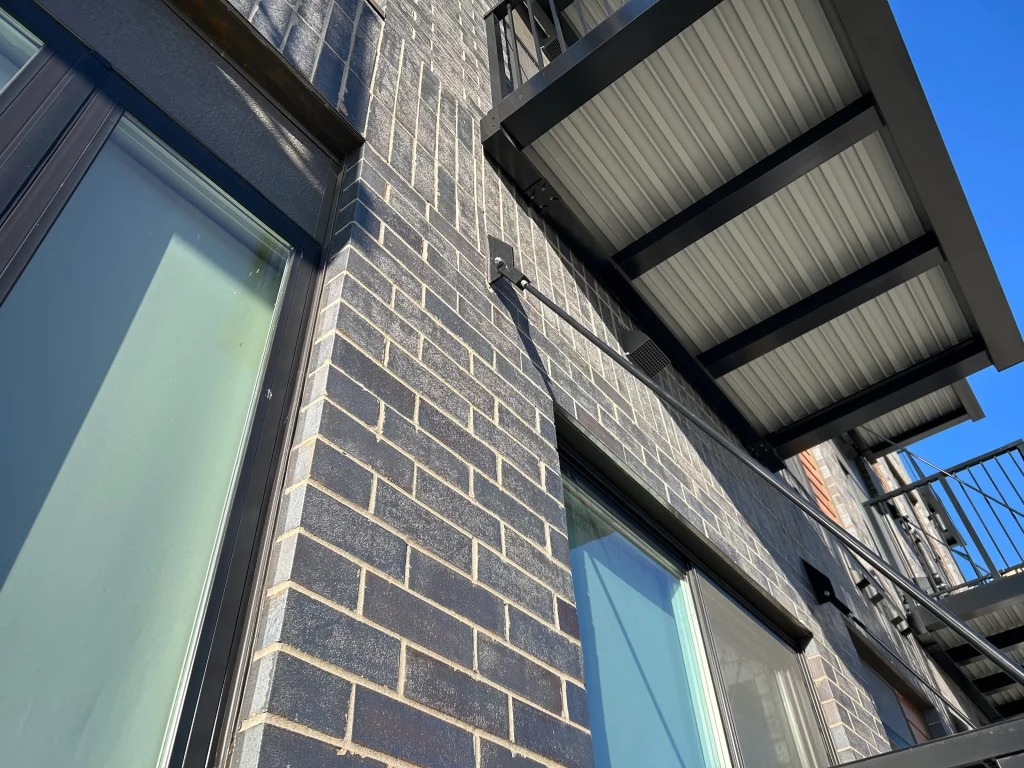
Canopies and balconies sit in some of the most weather-exposed positions on a building, while fencing runs are specified at volume across a property’s perimeter. In each case, aluminum’s combination of light weight and low maintenance keeps both installation and lifecycle costs lower than heavier-material alternatives.
Custom Fabrication: Why It Matters More Than Material Alone
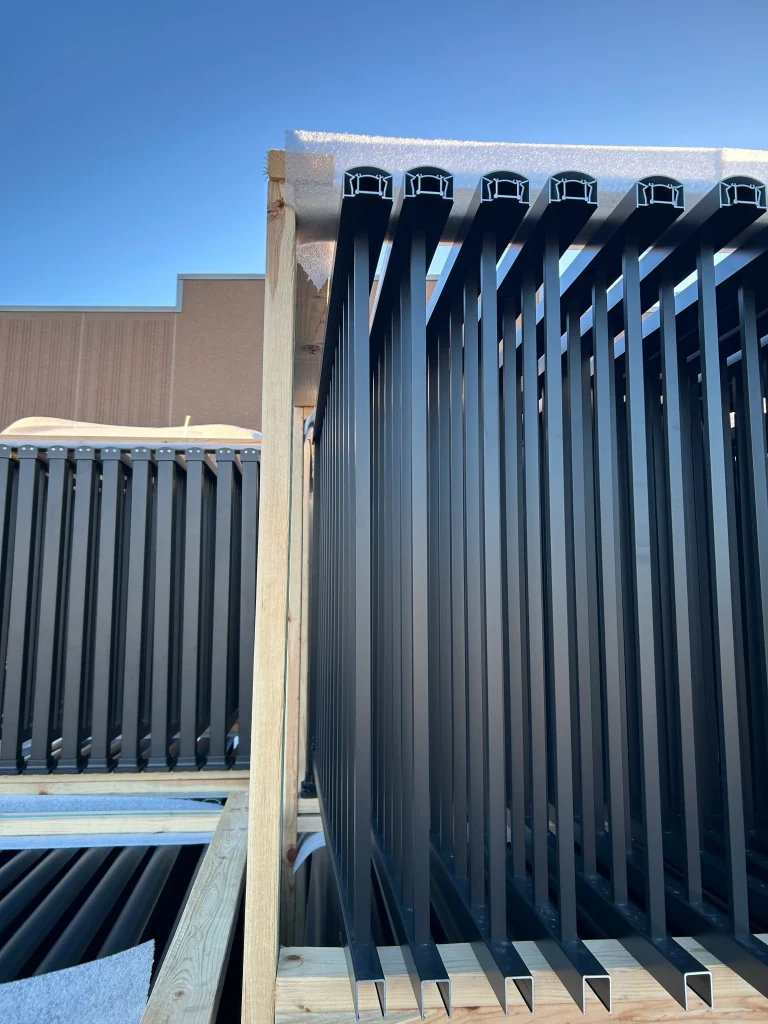
Choosing aluminum as a material is only half the equation — the fabrication process determines whether that material actually performs to specification once installed. A fabricator working directly from architectural and structural drawings, rather than adapting generic templates, is what turns aluminum’s material advantages into a project that passes inspection and performs for decades.
- Shop drawing accuracy determines whether load calculations, code dimensions, and connection details translate correctly from design to fabrication
- Alloy grade selection (commonly 6061-T6) confirms the material actually meets the application’s structural demands
- Finish specification should match the installation’s real exposure environment — coastal, industrial, or standard exterior
- Fabrication capacity needs to support the project’s actual volume and delivery schedule, not just a sample run
Aluminum vs. Traditional Infrastructure Materials
| Factor | Aluminum | Steel | Wood/Composite |
|---|---|---|---|
| Structural weight | Low | High | Low to moderate |
| Corrosion/weather resistance | High (natural oxide layer) | Moderate (coating-dependent) | Low to moderate (rot/UV degradation) |
| Maintenance requirement | Low | Moderate to high | High |
| Design and fabrication flexibility | High (custom shop fabrication) | High, heavier process | Moderate |
| Typical service life | 20+ years, minimal intervention | 20+ years, maintenance-dependent | 10-15 years before replacement/repair |
| Best-fit commercial applications | Railings, ladders, canopies, fencing, balconies | High-security, high-impact structures | Limited commercial exterior use |
Working with an Aluminum Fabricator Across Project Types
We fabricate custom aluminum railings, fences, ladders, canopies, and balconies for commercial contractors, architects, and developers, working directly from project drawings and specifications to engineer each system to the building’s actual structural and environmental conditions. Standardizing on a single trusted fabricator across these infrastructure elements simplifies coordination and keeps finish and material specifications consistent across an entire project.
Frequently Asked Questions
Is aluminum a good choice for every type of commercial infrastructure?
Aluminum performs well across most exterior infrastructure applications — railings, ladders, canopies, fencing, balconies — but high-impact security applications may still favor steel’s raw structural strength depending on the specific risk profile.
How does aluminum fabrication reduce long-term maintenance costs?
Aluminum’s natural corrosion resistance eliminates the recurring coating inspection and touch-up cycle steel requires, which is typically the largest ongoing maintenance cost across exterior commercial infrastructure.
Why does the fabricator matter as much as the material choice?
Aluminum’s structural and code performance depends on accurate shop drawings, correct alloy selection, and proper finish specification — a fabricator working from generic templates rather than actual project drawings is the most common source of field problems, regardless of material quality.
Conclusion
Aluminum fabrication has become the standard for modern commercial infrastructure because it solves the weight, corrosion, and maintenance problems that heavier materials leave unresolved across railings, ladders, canopies, fencing, and balconies alike. The material’s advantages only fully materialize when paired with a fabricator that engineers each system from the project’s actual drawings and conditions. Reach out to our team to discuss your infrastructure project and get a fabrication plan built around your building’s specific requirements.
Join our social networks to stay updated with our latest news and events. Don’t miss out on anything and follow our accounts today! Contact us!