Hampton Roads presents a fabrication environment few other regions match — a dense mix of commercial, industrial, and maritime construction sitting directly against a coastal climate that punishes the wrong material choice within a few short years. Partnering with a local aluminum fabricator in Hampton Roads gives contractors and property owners a supplier who already understands that environment, rather than one learning it on a live project. This guide covers what that local expertise actually delivers.
Why Location Matters for Aluminum Fabrication Projects
A local Hampton Roads fabricator brings region-specific knowledge of coastal corrosion conditions, regional code variation, and delivery logistics that an out-of-region supplier has to learn on the job — often at the buyer’s expense. For contractors managing tight commercial timelines, that difference shows up directly in schedule reliability and finish performance.
Hampton Roads’ combination of salt air, high humidity, and a construction market spanning Norfolk, Virginia Beach, Chesapeake, and the broader region creates conditions that reward fabricators with direct, ongoing experience in the area. A supplier quoting from outside the region can match a price; matching the technical judgment built from repeated local projects is harder to replicate.
Coastal Climate Expertise
Salt air accelerates corrosion on any metal surface where the protective finish is compromised, and Hampton Roads’ proximity to the Chesapeake Bay and Atlantic coastline puts commercial buildings under near-constant exposure to that condition. A fabricator with a track record in the region already knows which finish systems — powder coating versus anodizing — actually hold up under sustained salt exposure, rather than specifying based on general climate assumptions.
Familiarity with Regional Building Codes
Building codes carry local amendments that vary by jurisdiction even within the same state, and a fabricator working regularly across Hampton Roads municipalities has already encountered the code interpretations specific to this market. That familiarity reduces the risk of a design detail passing review in one jurisdiction but requiring rework in another.

Practical Advantages of Working with a Regional Supplier
Beyond climate and code knowledge, a local Hampton Roads fabricator offers faster communication, more predictable delivery logistics, and the ability to visit a job site directly when field conditions don’t match the original drawings. These operational advantages compound over the life of a project, particularly one with a tight construction schedule.
Faster Turnaround and Delivery Logistics
Shorter shipping distances mean fewer variables between fabrication completion and installation — no interstate freight scheduling, no extended transit windows that can compress an already tight construction timeline. For phased deliveries matching a construction sequence, proximity gives the supplier more flexibility to adjust as the schedule shifts.
Site Visits and Field Verification
Existing structures rarely match their drawings exactly, especially on retrofit or renovation projects. A local fabricator can send someone to field-verify dimensions before finalizing shop drawings, catching discrepancies that would otherwise surface as a fabrication error discovered only at installation.
Responsiveness During Construction Changes
Construction schedules shift, and field conditions change mid-project more often than any GC would prefer. A fabricator based in the region can respond to a schedule change or a field revision request without the lag an out-of-region supplier builds into their process by default.
What to Look for in a Hampton Roads Aluminum Fabricator
The strongest regional fabricators combine local coastal experience with the same core capabilities that matter anywhere: custom engineering from project drawings, in-house finishing options, and realistic production capacity for commercial-scale orders. Local proximity is an advantage — but only alongside real fabrication competency.
- Project history in the region, specifically commercial work in Hampton Roads’ coastal or high-humidity conditions
- In-house finishing capability appropriate for salt air exposure — confirm whether anodizing or marine-grade powder coating is offered
- Custom fabrication from drawings, rather than a catalog-only product line
- Realistic lead times backed by shop capacity, not just proximity
Local vs. Out-of-Region Fabricator: A Direct Comparison
| Factor | Local Hampton Roads Fabricator | Out-of-Region Supplier |
|---|---|---|
| Coastal corrosion expertise | Built from direct regional project history | Often based on general assumptions |
| Regional code familiarity | Established through repeated local projects | Learned during the current project |
| Delivery logistics | Shorter transit, easier phased scheduling | Longer transit, less schedule flexibility |
| Site visit availability | Practical and low-cost | Often limited or unavailable |
| Communication speed | Same time zone, direct relationship | May involve account layers or delays |
| Response to field changes | Faster turnaround on revisions | Slower due to distance and process overhead |
Working with a Local Fabrication Partner
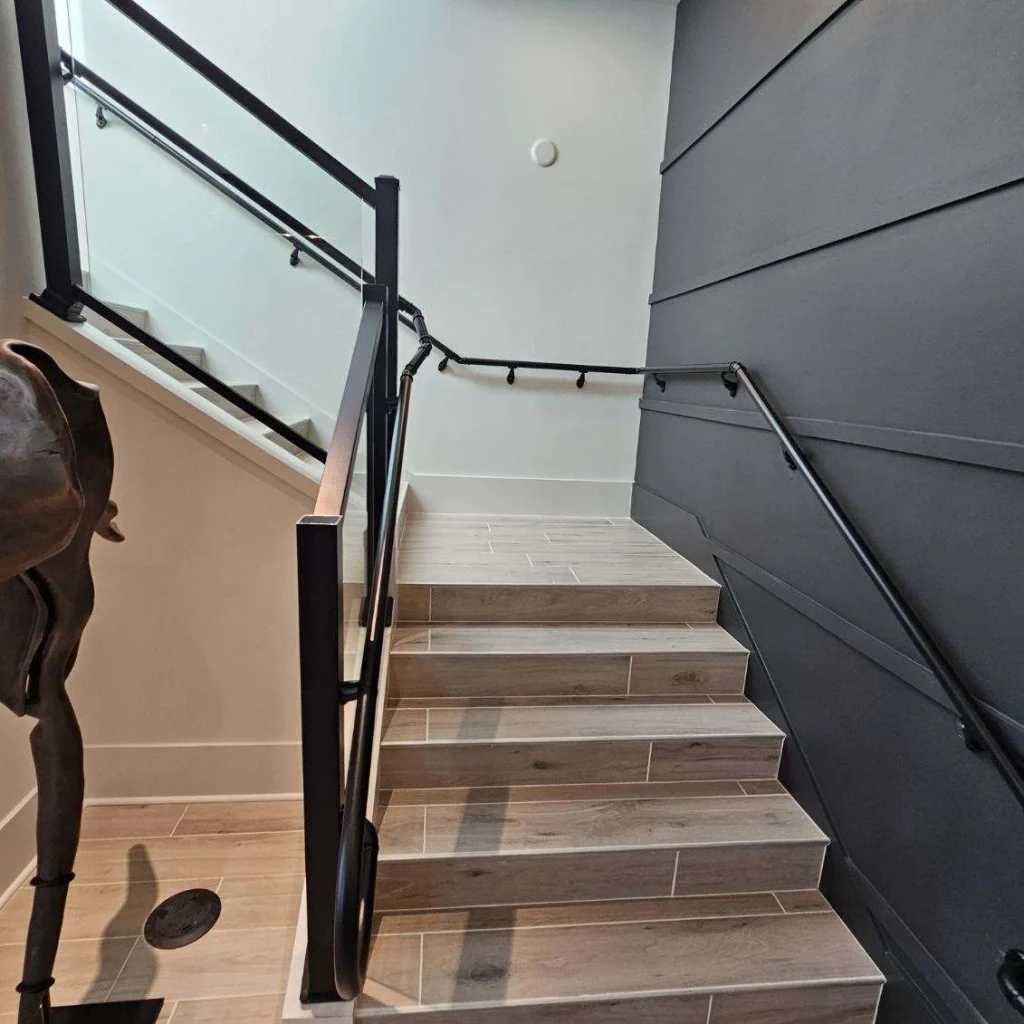
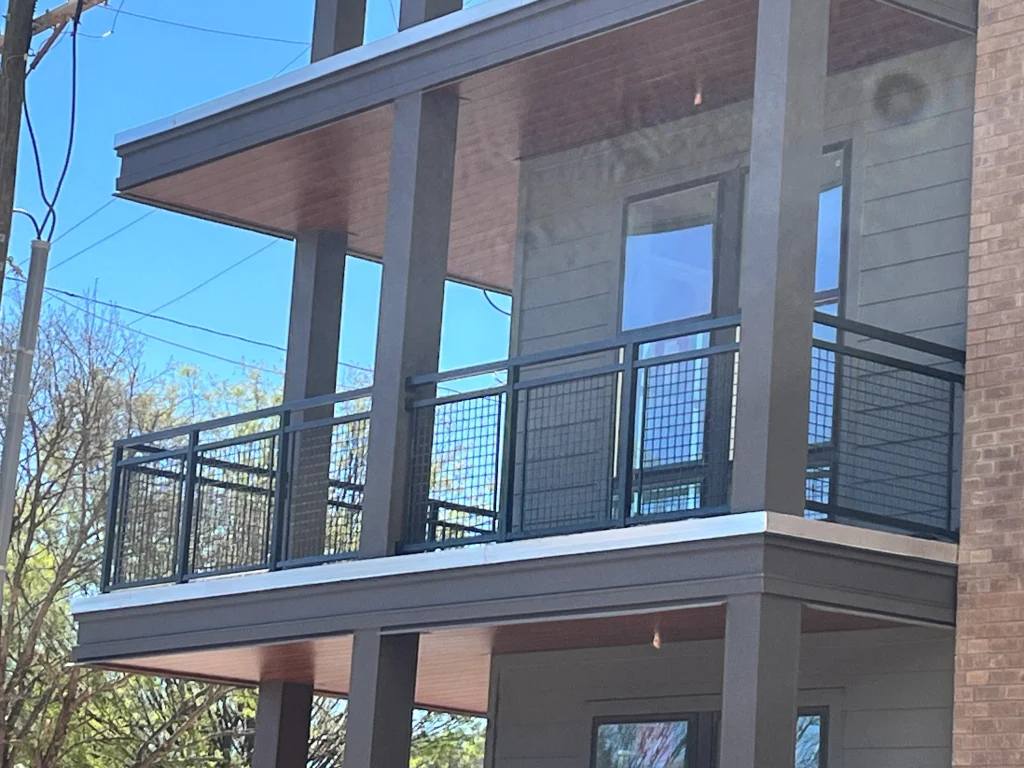
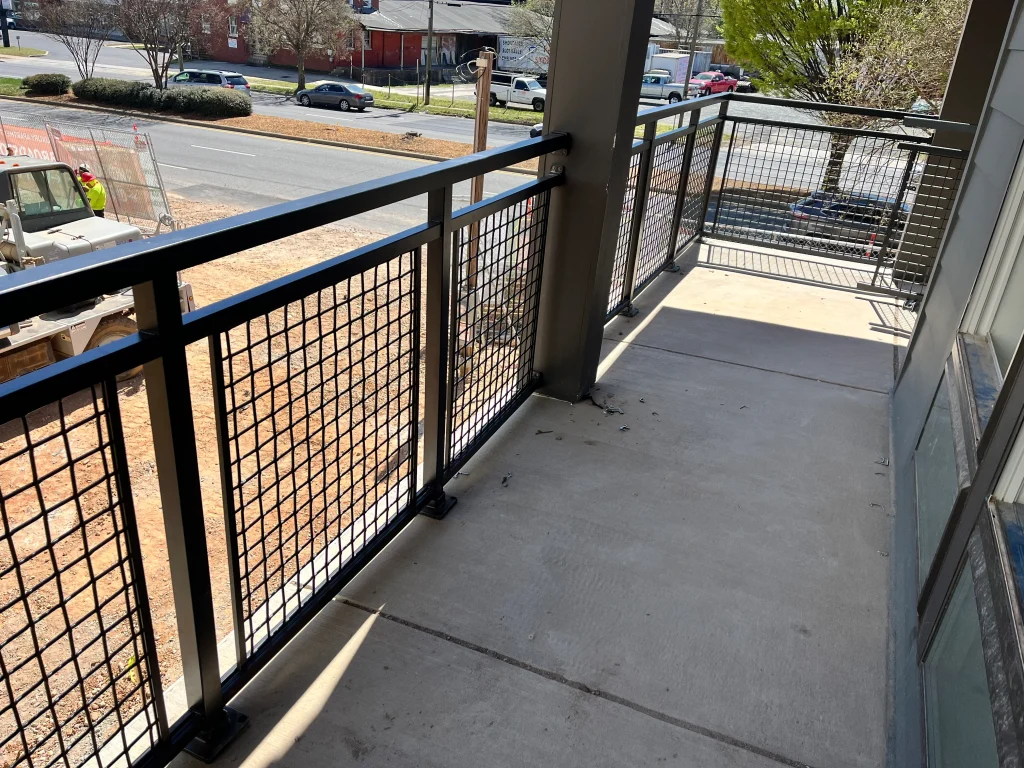
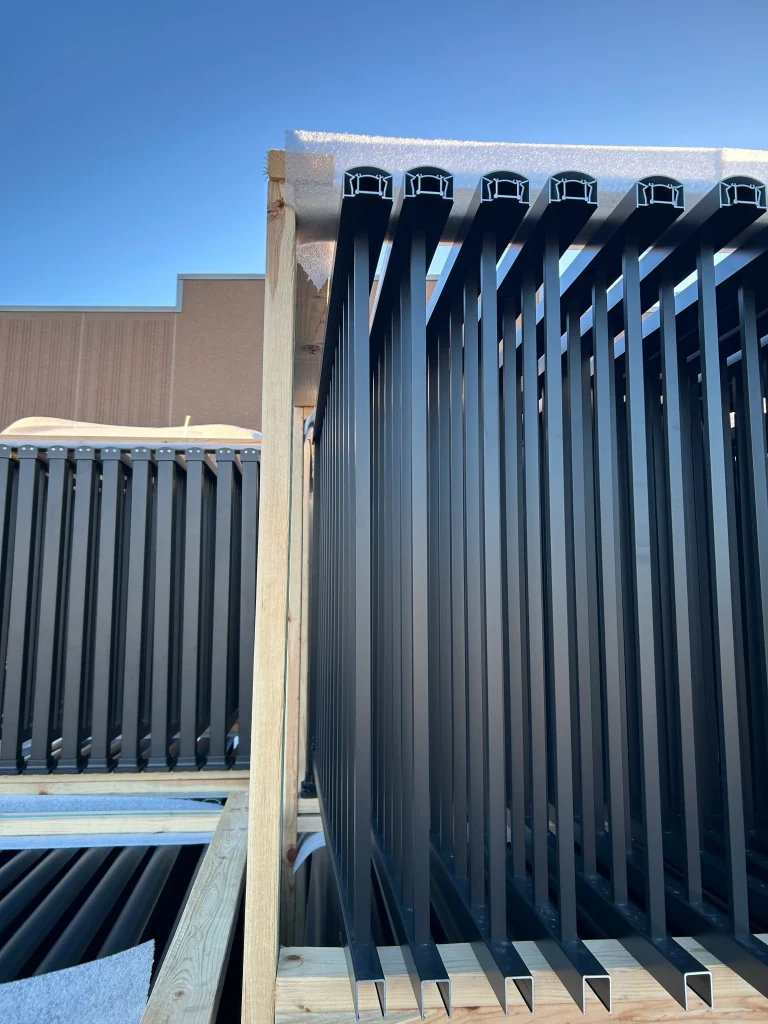
We fabricate custom aluminum railings, fencing, ladders, canopies, and balconies for commercial contractors, builders, and architects across Hampton Roads and the broader Virginia, North Carolina, and South Carolina region, working directly from project drawings with finish systems suited to the area’s coastal conditions. Being local means field verification, schedule adjustments, and finish recommendations come from direct regional experience — not a generic spec sheet.
Frequently Asked Questions
Does a local fabricator actually cost less than an out-of-region supplier?
Not always on the initial quote, but total project cost often favors the local supplier once reduced shipping, fewer schedule delays, and lower risk of finish-related rework are factored in.
Why does coastal exposure matter so much for finish selection in Hampton Roads?
Salt air accelerates corrosion on any exposed metal surface where the protective coating is compromised, so finish systems that perform well inland can underperform significantly in Hampton Roads’ coastal and high-humidity conditions.
Can a local fabricator handle a multi-phase commercial project?
Yes — proximity typically makes phased delivery easier to manage, since a local fabricator can adjust production sequencing more responsively to match a shifting construction schedule than a supplier managing longer transit logistics.
Conclusion
Partnering with a local Hampton Roads aluminum fabricator brings a combination of coastal climate expertise, regional code familiarity, and logistical responsiveness that’s difficult for an out-of-region supplier to match on a commercial timeline. The advantage only holds, though, when that local knowledge is paired with real fabrication capability — custom engineering, proper finishing, and realistic production capacity. Reach out to our team to discuss your Hampton Roads project and get a fabrication plan built around the region’s actual conditions.
Join our social networks to stay updated with our latest news and events. Don’t miss out on anything and follow our accounts today! Contact us!